
Start Here
I started in a google doc with a list of logistic notes from two other recent big events I’d done.
I was an Onsite Volunteer Co-Captain for the 2026 Raleigh-Durham Startup Week which had a 30+ all-volunteer organizing team, 4 days, two cities, and 8+ venues for 1000+ attendees. I had been working on the Experience Team for the event and wanted to capture the logistical notes and ideas in a google doc for myself.
I had also co-organized the three-day Ampersand Gathering with 96 attendees in 2025, so I went back and reviewed the meeting notes to capture insights and ideas from there too.
Starting with the logistics is a familiar move for me. It’s a comfort zone that I understand and can handle. It’s also often an obvious early move when planning an event, especially because the choice of venue determines the date, location, the capacity, and is one of the biggest expenses.
But before I went too far into the logistical weeds I dove into the other foundational element - purpose, approach, audience, and programming. Because those would impact the venue, just as the venue would impact them.
What was the purpose of this event?
A gathering helping solo business owners like me build stronger businesses together and become more skilled and strategic CEOs and founders.
Who was it for?
The self-employed solo operator making big decisions in a company of one. Likely a service-based business who might call themselves a soloist, freelancer, solopreneur, founder, small business owner, content creator, creative, artist, or a side-hustler
What were the outcomes I wanted for participants?
Learn how to build a solo business
Build your business skills/learn how to run your business
Actionable momentum and a network of supportive connections.
I want to create a rewarding and meaningful experience.
How did I want people to feel?
I want people to feel welcomed, centered, supported, connected, strategic, actionable, and intimate. I want people to feel like they belong and have the energy and guidance to do the work.
How did I want to approach the gathering?
I want the focus to be interactive, practical, and actionable workshops. I don’t want a row of people sitting in chairs all day listening to presentations or panels.
I want it to amplify real connections and enable relationship building among all the people in the room.
I want this gathering to feel active, vibrant, encouraging, casual, and real
What sort of programming and experience elements might I include? What about intentionally exclude?
I decided not to have any panels, long keynotes, and presentations. Those familiarly yet often vaguely unsatisfying conference components that involve people in the front of the room talking and everyone else listening.
If there are no panels, then what is there?
The Solo Together Summit has 5 main programmatic structures:
Framing Sessions: It’s easy to think about showing up late to the welcome remarks that kick off many events or to duck out from the closing session at the end of the day. I believe those framing elements are important, especially when it moves beyond the logistics. The welcome session is a moment for everyone in the room to feel the collective energy and purpose of the gathering. For the host to set expectations and create a container that supports the experience throughout the summit. And the closing bookend is a moment to reflect on what happened and integrate the experience before exiting the container and returning to the daily details of life. Intentional framing sessions like welcomes, transitions, and closings are opportunities to anchor the entire experience.
Lightning Talks: These are short (15 minute) talks from an awesome human that look like mini-keynotes, because they are. But instead of then immediately leaving the room and never having a chance for reflection, application, or integration I’ve paired these quick talks with a facilitated discussion activity so you can make it personal.
Interactive Workshops: These 75-minute sessions are the protein of the summit. Designed to teach practical and actionable business these workshops include interactive elements, activities, prompts, and discussion. These are not passive presentations, there actively fueling you as you build your business skills.
Wise Trios: This facilitated peer advising sessions gives you a moment to share a challenge you have and get practical help, insights, and wisdom from peers. Hearing Ideas and inspiration from the stage can be nice, but you know what’s better? Getting custom feedback from people you can have a conversation with and who might just be your new biz bestie.
Facilitated Connection Building: I’ve been to many conferences where the 15-minute break between sessions was for networking, a bio break, walking across a hotel to another session, and browsing the expo tables. Honestly I would choose one, maybe two, and unless you’re better at making connections in the line for the bathroom than me, the opportunity to build connections never happened. These sessions at the Solo Together Summit make intentional space for networking and building connections in a structured yet dynamic way, so you don’t have to walk up to a stranger to start a conversation.
What marketing and outreach work would be needed?
Lots. The answer here is lots. This is one of the big reasons I worked hard to spin up the Solo Together Summit in May/June and continue dialing in the big logistical elements like the venues and workshops early. The biggest lift for this event is the marketing and I wanted as much time as possible to do the work of raising awareness about the summit with potential attendees, showing the value, and inviting people to sign up. And I was able to open early bird tickets for sale on July 1st.
What’s the estimated budget?
The estimated budget is another big element that I built out to help make decisions. I had a spreadsheet from Ampersand Gathering and so I used that data, plus insights from RDSW and a bit of googling to figure out how much it might cost to put on the event I envisioned. I explored a few different price points, venue options, participant numbers, and expense variables.
Writing it all down makes it more real.
And doing the work to create a container required me to clarify for myself what this was all for and has helped me make decisions - including actually deciding to do it.
What’s the venue and therefore the date and location?
And now we are back to logistics and the first logistical domino that needs to fall into place because it impacts a lot of decisions including the date and location.
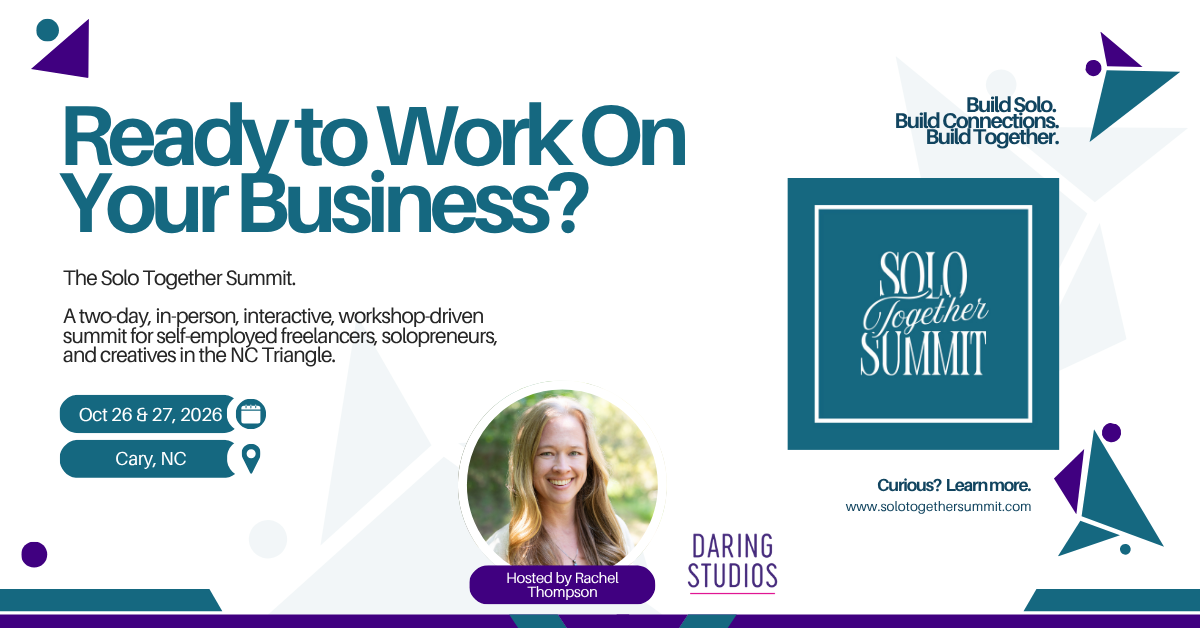
Rachel Thompson is the founder of the Solo Together Summit. She is also the founder and CEO of Daring Studios.